Your step-by-step resource for understanding, preparing for, and succeeding on the National Council Licensure Examination
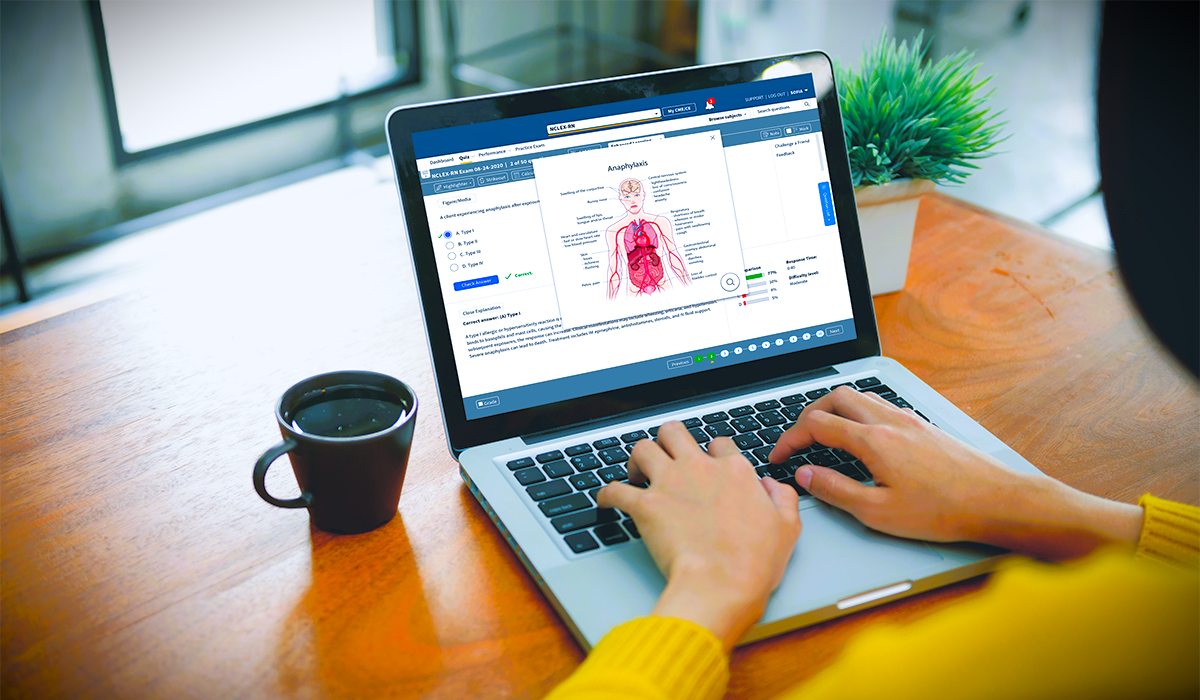
What Exactly Is the NCLEX?
NCLEX stands for National Council Licensure Examination—the standardized, mandatory exam administered by the National Council of State Boards of Nursing (NCSBN).
Think of it as your professional "license to practice." No matter your education background or country of origin, you cannot work as a licensed nurse in the United States or Canada without passing this exam.
Why Does This Exam Exist?
The NCLEX isn't designed to trick you. Its sole purpose is public protection. It ensures that every newly licensed nurse has the minimum competency to:
- Make safe clinical judgments
- Prioritize patient care under pressure
- Apply nursing knowledge in real-world scenarios
- Communicate effectively with patients and healthcare teams
Key Insight: The NCLEX tests how you think, not just what you know. Critical thinking and clinical reasoning matter more than rote memorization.
NCLEX-RN vs. NCLEX-PN
| Feature | NCLEX-RN | NCLEX-PN |
|---|---|---|
| For | Registered Nurses (RNs) | Licensed Practical/Vocational Nurses (LPN/LVN) |
| Scope | Broader: assessment, care planning, delegation, leadership | Focused: direct patient care under RN/physician supervision |
| Career Path | Hospitals, ICUs, specialties, management, advanced degrees | Clinics, long-term care, home health, entry-level roles |
| Next Steps | Can pursue BSN, MSN, NP, CRNA, etc. | Can bridge to RN via LPN-to-RN programs |
Most international nurses aiming for U.S. hospital roles target the NCLEX-RN.
How the Computer Adaptive Test (CAT) Works
This is where many candidates feel anxious—so let's demystify it.
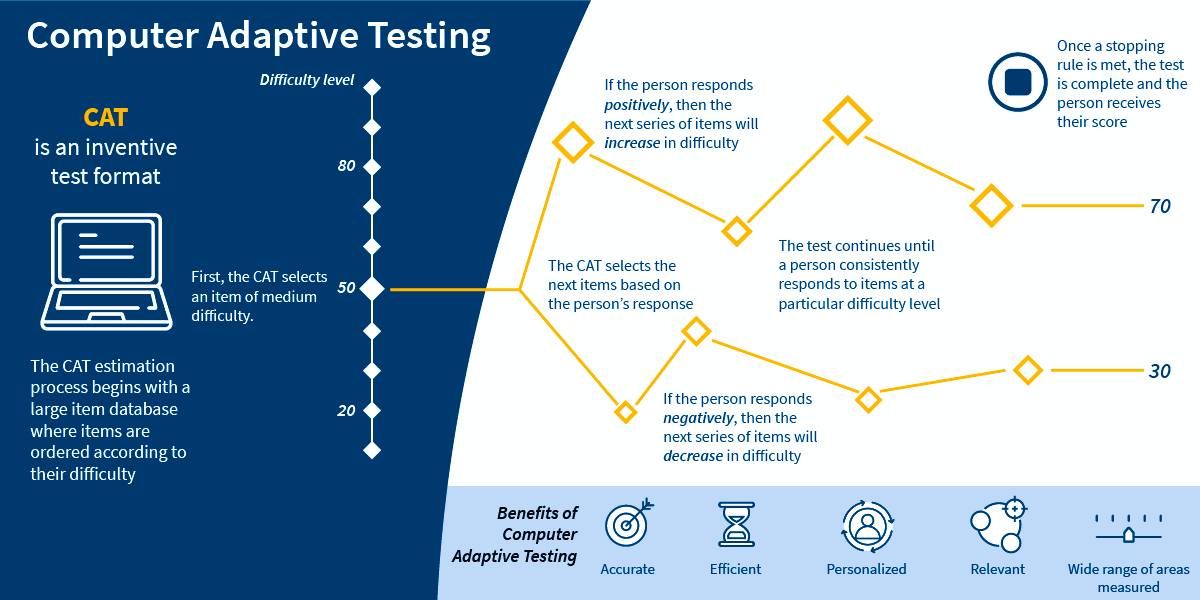
Illustration of how Computer Adaptive Testing adjusts question difficulty.
What Is CAT?
Instead of a fixed set of questions, the NCLEX uses adaptive technology:
- You start with a question of medium difficulty.
- If you answer correctly, the next question becomes slightly harder.
- If you answer incorrectly, the next question becomes slightly easier.
- The system continuously estimates your ability level.
When Does the Test End?
The exam stops when one of these happens:
- You've answered enough questions for the system to be 95% confident you're above the passing standard
- You've reached the maximum number of questions (150)
- You've used all 5 hours of testing time
Pro Tip: Don't try to "game" the system. Focus on answering each question to the best of your ability. The algorithm is designed to find your true competency level—not to punish you.
The 4 Core Content Areas
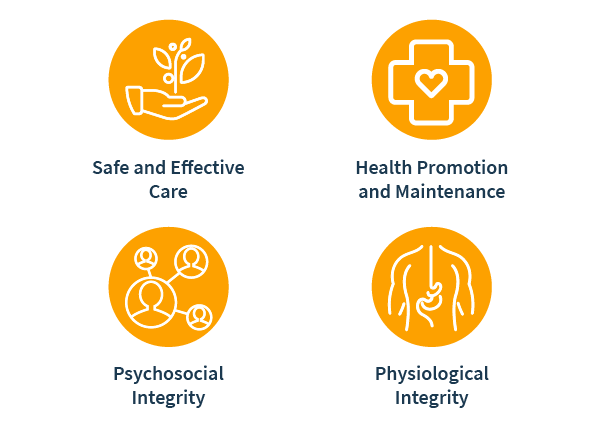
The NCLEX blueprint organizes questions into four major client needs categories:
1. Safe and Effective Care Environment (15-25%)
- Management of Care: Delegation, prioritization, informed consent,
legal/ethical issues
Example: Which patient should the RN assess first? A post-op patient with dropping BP or a stable diabetic needing education? - Safety & Infection Control: Fall prevention, PPE, emergency
response
Example: What's the first action when you discover a fire in a patient's room?
2. Health Promotion and Maintenance (6-12%)
- Growth/development across lifespan, preventive screenings, lifestyle counseling
Example: What immunizations does a 2-month-old infant need?
3. Psychosocial Integrity (6-12%)
- Mental health, coping strategies, therapeutic communication, crisis intervention
Example: How do you respond when a patient says, "I don't want to live anymore"?
4. Physiological Integrity (45-65% — Largest Section)
- Basic Care & Comfort: ADLs, nutrition, mobility
- Pharmacological Therapies: Medication safety, side effects, calculations
- Reduction of Risk Potential: Recognizing complications, interpreting labs
- Physiological Adaptation: Managing acute/chronic conditions (e.g.,
heart failure, sepsis, trauma)
Example: A patient with CHF has +3 pitting edema and crackles in lungs. What intervention comes first?
Special Pathway for International Nurses

If you're from Pakistan, India, the Philippines, or another country outside the U.S./Canada, here's your roadmap:
Step-by-Step Process:
- Credential Evaluation: Submit transcripts to an agency like CGFNS or ERES for verification.
- English Proficiency: Pass TOEFL or IELTS if required by your target state.
- Apply for Licensure: Choose a State Board of Nursing (some are more international-friendly, like Texas, California, or New York).
- Register for NCLEX: Pay fees, receive Authorization to Test (ATT).
- Schedule & Pass NCLEX: Test at a Pearson VUE center (available globally).
- Secure Visa & Job: Many U.S. hospitals sponsor EB-3 visas for licensed RNs.
Important: Requirements vary by state. Always check with your chosen State Board of Nursing early in the process.
Career Doors That Open After Passing
Passing NCLEX = Your U.S. RN License. And with that license comes incredible flexibility:
Where You Can Work:
- Major hospital systems (Baylor Scott & White, Texas Health Resources, Parkland, etc.)
- Outpatient clinics, surgery centers, public health departments
- Schools, corporate wellness, telehealth, research institutions
Specialty Paths to Explore:
| Category | Examples |
|---|---|
| Primary Care | Family Medicine, Pediatrics, Internal Medicine |
| Medical Subspecialties | Cardiology, Oncology, ICU, ER, Nephrology |
| Procedural/Surgical | OR, PACU, Labor & Delivery, Cath Lab |
| Community & Public Health | Home Health, School Nursing, Case Management |
| Advanced Practice | Nurse Practitioner, CRNA, Clinical Nurse Specialist |
Real Talk: Many international nurses start in med-surg or telemetry units to build U.S. clinical experience—then specialize later. There's no "wrong" first job.
Smart Preparation Strategies
- Use the NCSBN Test Plan: It's free and outlines exactly what's tested.
- Practice with CAT-style Questions: Platforms like UWorld, Archer, or Kaplan simulate the real exam format.
- Focus on "Next Best Action": NCLEX loves prioritization. Ask: What is the MOST urgent? What keeps the patient safest?
- Master Pharmacology Basics: Know high-alert meds, antidotes, and nursing implications.
- Join a Study Group or Prep Course: Institutes like PMCI offer structured support for international candidates.
- Simulate Test Day: Do a full 85-question practice test under timed conditions.
Timeline Tip: Most successful candidates study 3-6 months consistently (2-4 hours/day), depending on background and confidence level.

Final Thoughts: This Is Your Moment
The NCLEX is challenging—but it's also fair, transparent, and achievable with focused preparation. For nurses from Pakistan, India, the Philippines, and beyond: Your skills are needed.
Your U.S. nursing career starts with one exam. Make it count.
Start Your Journey TodayDisclaimer: This guide is for informational purposes only. Always refer to the official NCSBN website and your chosen State Board of Nursing for the most current policies, fees, and requirements.